Two Nights, One Tank of Fuel: The Case for the Weekend Caravan
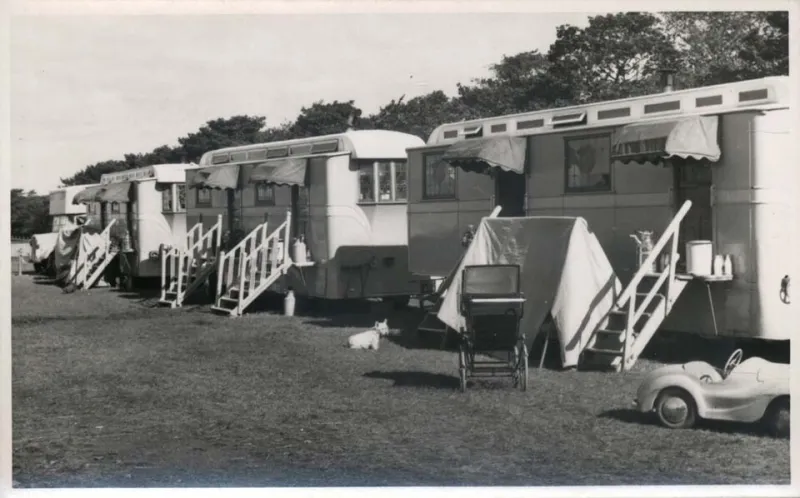
Photo: Tyne & Wear Archives & Museums, No restrictions, via Wikimedia Commons
There is a caravan on a storage site near me that I have walked past for three summers. It is immaculate. It has also not moved an inch in that time. I do not say this to be unkind — I say it because it is the most common caravan story in Britain, and it is a shame.
The pattern is familiar. We buy the van for the big trip. The big trip needs two weeks of leave, a clear diary, a dog sitter, a school-holiday slot and a small miracle at work. So it happens once, maybe twice, and then the van becomes an expensive garden ornament with a solar panel on top.
Meanwhile, the trips that actually happen — the ones that get you out under canvas-and-aluminium in the rain, drinking tea from a flask you filled in a lay-by — are the short ones. Two nights. Forty-eight hours. One tank of fuel.
The bar is low, and that is the point
A fortnight away carries expectations. It has to be worth it. There is a subconscious pressure for sunshine, for happy children, for a campsite with a pool and a decent shop and a pub within staggering distance. When the weather turns on day three, the whole edifice wobbles.
A weekend has no such burden. If it rains the entire time, you have lost a Saturday. If the site is a bit scruffy, you are gone by lunchtime on Sunday. If the kids moan, you will be home before the moaning becomes a personality trait.
That low bar is a strange sort of freedom. Strip out the expectation of a proper holiday and what is left is just... being somewhere else for a bit. Which, it turns out, is most of what we wanted in the first place.
Pitch selection: choose for the short stay, not the long one
A fortnight on a large holiday park makes sense — you want the pool, the entertainment, the chip shop. For two nights, the criteria are entirely different.
Priorities for a short break:
- Under 90 minutes from the door. Anything longer and Friday evening towing stops being fun and starts being a chore with a headtorch.
- Hardstanding or a gravel super-pitch. In October, a grass pitch plus a front-wheel-drive tow car is a recovery-truck subscription.
- A pub within walking distance. You are not cooking a full meal at nine o'clock on a Friday. Be honest.
- A short, simple arrival. Sites with a barrier code, a warden and a marked pitch are worth more on a Friday night than a wilder field with a view.
Some reliable short-break bets: a Caravan and Motorhome Club site within reach of a market town; a Camping and Caravanning Club site with a late-arrival bay; the small five-van Certificated Locations that dot the edge of the Peak District and the Yorkshire Dales. Chatsworth, Bakewell and the Hope Valley are all within an hour of each other, so a single Friday pitch gives you half a dozen Saturday options.
Do not over-plan the Saturday. Two nights is not enough time to justify a schedule.
The crate system: packing that survives repetition
Most people lose the weekend break at the packing stage. If every trip starts with an hour of hunting for the levelling ramps, you will stop going by September.
The answer is a permanent kit — a plastic crate or a Really Useful Box that lives in the van or the garage and never gets raided for anything else. Washing-up liquid, tea, coffee, a spare gas lighter, bin bags, cloths, a bottle opener, spare fuses, a torch, two toilet rolls, and a small toolkit. Then a second crate for clothes: everyone gets one, packed by the person who owns the clothes, and nobody negotiates at the door.
Food is the other time sink. Shop once, on Thursday evening, for four specific meals: Friday night, Saturday breakfast, Saturday supper, Sunday breakfast. Not a fortnight's menu. Four.
And keep a laminated checklist inside the front locker. Tick, tick, tick, gone.
Towing distance: the 90-minute rule of thumb
There is no law about how far you should tow for a short break, but there is a sensible working limit: roughly ninety minutes, or around 50 to 60 miles on mixed roads. Beyond that, the round trip starts to eat the weekend, fuel consumption climbs, and the Saturday you were looking forward to becomes a Saturday you spend recovering.
For families in the Midlands, that puts the Cotswolds, the Forest of Dean, Cannock Chase and the Warwickshire villages comfortably in range. From Manchester, it is the southern Lakes, the Cheshire plain and the edge of the Peak. From London, the Kent coast, the Chilterns and the New Forest are all honest weekend territory.
If you do want something farther out, take the Friday afternoon off rather than towing into the dark. Arriving at seven with light in the sky, awning up by eight, is an entirely different experience from arriving at ten in the rain.
A few templates worth pinning to the fridge
- The coast run. Suffolk's shingle between Aldeburgh and Southwold, or the quieter end of the Norfolk coast around Wells. Flat, easy towing, brilliant for retirees with a dog.
- The moors loop. North Yorkshire, pitching near Pickering, Saturday spent between Helmsley and Rosedale Abbey. Narrow lanes — check the route before you commit.
- The Dales hop. Three nights is cheating slightly, but a Friday-to-Monday based near Hawes gives you the Buttertubs and a proper Yorkshire breakfast.
- The Welsh border. Pitching near Ludlow and using it as a base for the Mortimer Trail and too much cheese.
- The city break. Yes, really — sites on the edge of York, Chester and Bath exist and turn a city visit into a twenty-quid weekend.
The milestone view
Milestones, in the old sense, marked how far you had come. But there is another reading that suits us better: the smaller, more frequent markers that show you are still moving.
Six weekends a year, at two nights a go, gets you twelve nights in the van and a dozen small resets. One fortnight gets you fourteen nights and a repair bill for a caravan that spent fifty weeks doing nothing. The numbers are closer than you would think, and the weekends are the ones that actually happen.
Start with somewhere forty minutes away that you have never bothered to visit. Take the crate. Take four meals. Leave on Friday at six, come home Sunday after lunch, and see what you have missed all these years.