Rubber Has a Birthday: The Caravan Tyre Check That Ignores Tread
Most of us have done it: a quick kneel beside the caravan, a prod of the tread with a thumb, and a mental tick in the box marked “tyres fine”. It feels responsible. It is also the wrong test. On a caravan, tread depth is often the least useful thing you can measure. The tyre that causes trouble is usually the one with plenty of tread left and a birthday it would rather not talk about.
Caravan tyres live a strange life. They spend weeks or months parked up under a heavy, static load, often in the same spot, then get asked to carry a fully laden van down a motorway at 60mph. A car tyre wears out through use; a caravan tyre can quietly expire through age, sunlight and inactivity. That is why the date stamp on the sidewall matters more than the depth of the grooves.
The five-year rule of thumb
There is no single legal expiry date for caravan tyres in the UK. The legal tread minimum is 1.6mm across the central three-quarters of the tread, and the tyre must be free from serious damage, bulges and cords. But legal is not the same as sensible. Many caravan specialists, insurers and breakdown organisations suggest replacing tyres at around five to seven years old regardless of tread, with five years a useful point to start planning and seven years a point to stop arguing with yourself.
That advice exists for a reason. Caravan tyres are often asked to run close to their maximum load, they may sit for long periods, and they are exposed to UV, ozone and the general damp of a British storage yard. The rubber compounds harden. The sidewall loses flexibility. Cracks begin in the places you only notice when you are looking for them. A tyre can pass the thumb test and still be the weakest link on the outfit.
If your van is five years old and still on its original tyres, this is the season to read the sidewalls properly. If it is seven or more, replacement is not an overreaction. It is basic housekeeping.
How to read the four-digit date code
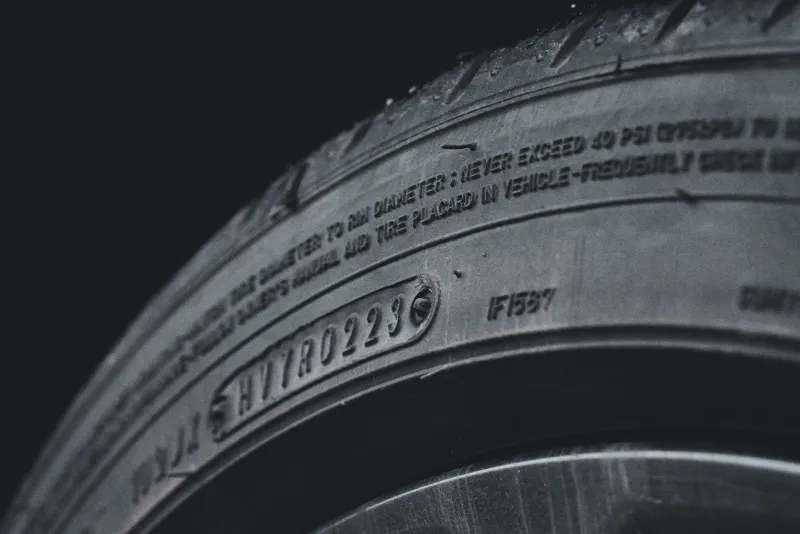
Every tyre sold in the UK carries a DOT code on the sidewall. The important bit is the final four digits, usually inside an oval or a raised block. Those four numbers tell you the week and year of manufacture. The first two digits are the week, the last two are the year.
So “2321” means the 23rd week of 2021. “0718” means the seventh week of 2018. A tyre stamped 0718 is not “nearly new” because it has only done two trips to the coast. It is a tyre made in the winter of 2018, and by the 2026 season it is well into the zone where age matters more than appearance.
Check all four road wheels, and check the spare. The spare is the most forgotten tyre on the caravan and often the oldest. If you cannot find the date code, clean the sidewall with a damp cloth and look again. It is usually there, just dusty.
Cracks, bulges and the things tread hides
Once you have the dates, spend a few minutes on the sidewalls. Look for fine crazing — a network of small cracks, often near the shoulder or between the lettering. Some superficial weathering is normal, but deep cracks that catch a fingernail are a warning. Look for bulges, lumps, cuts, embedded stones and any sign of cord or wire. Check the valve stems too; perished rubber valves are cheap to replace and deeply annoying at the roadside.
Pressures should be set cold, to the figures in your caravan handbook or the tyre placard, not to the number that “looks about right”. A caravan tyre that is underinflated flexes more, heats up more and is more likely to fail. An overinflated one gives a harsher tow and less grip. Buy a decent gauge and use it properly.
A ten-minute pre-season routine
This does not need to become a project. Ten minutes with a torch, a cloth and a pressure gauge will do more for your safety than another bottle of polish.
- Clean each sidewall enough to read the date code and inspect the rubber.
- Record all four codes and the spare, then note them in your phone.
- Check pressures cold and adjust to the handbook figures.
- Look for cracks, bulges, cuts and perished valve stems.
- Check tread depth anyway, but treat it as one part of the picture.
- Check wheel nut torque after storage and before the first trip.
- Make sure the jack, wrench and spare are present and usable.
If anything looks doubtful, take the van to a tyre specialist rather than saving the question for the first rainy lay-by. Caravan tyres are not expensive compared with the consequences of a failure.
What a blowout actually does
A caravan tyre failure at 60mph is not a gentle inconvenience. When a sidewall lets go, the tyre can lose its shape in an instant. The van may lurch, the stabiliser has to cope with a sudden sideways shove, and the car feels a tug through the towbar. Shredded rubber becomes debris for the next vehicle, and the hard shoulder is not always immediately available.
The right response, if it happens, is to keep the steering steady, ease off the accelerator and avoid stamping on the brakes. Let the outfit slow progressively, indicate early and get as far left as you safely can. That is easier to write than to do. The better answer is to make sure the tyre never reaches that point.
Caravan tyres do not fail to a timetable, but they do have a birthday. Check it. Five years, not five millimetres, is often the more honest measure.