Stones in the Hedge: Building a Caravan Tour Around Britain's Old Milestones
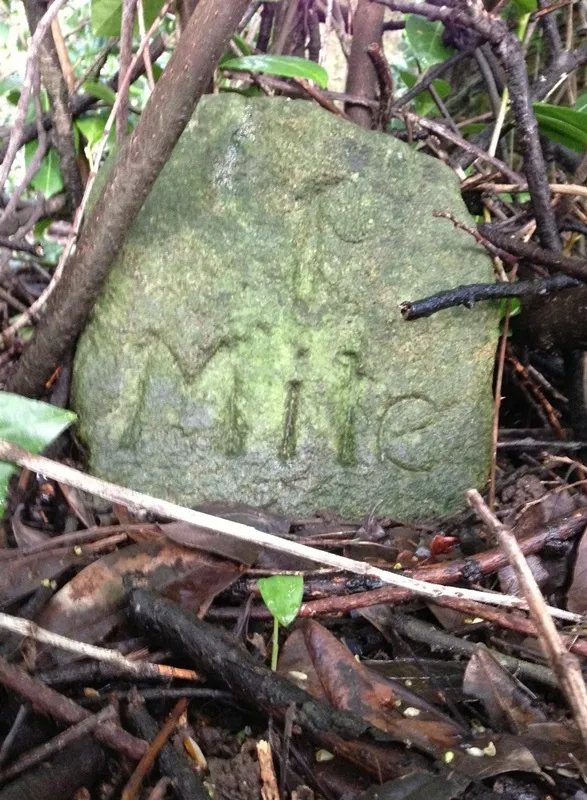
Photo: Milestone Society, CC BY-SA 2.0, via Wikimedia Commons
The satnav always wants the fastest line. The caravan usually wants the better one. Somewhere between those two instincts there's a lichen-covered stone leaning in a hedge, with a number and a couple of initials carved into it, marking a road that stopped being important about a century ago.
That's the starting point for what we've started calling milestone touring. You don't plan a trip around attractions. You pick one old road, follow the markers, and let the stopping points do the entertaining.
The hedge already has a map in it
Before the railways turned up, Britain's main roads were run by turnpike trusts — hundreds of them, each responsible for a stretch of road and each obliged to tell travellers how far they'd come. Hence the stones. Some are plain, some are ornate, some carry the name of the trust and the distance to the nearest market town. Thousands survive, a great many are listed, and a fair number are quietly being swallowed by cow parsley.
Why does this suit caravanners? Because an old turnpike is usually the road that became an A-road or a decent B-road. Wide enough for a stagecoach, reasonably direct, and lined with villages every couple of miles. The fast lane for a nineteenth-century coachman is, more often than not, a comfortable lane for a tow car in 2026.
Pick a spine, not a scatter of sights
The common mistake is building a loop of five attractions and then driving between them. Do the reverse. Choose one historic road and commit to a section of it — say sixty to ninety miles — then find two or three places to stay along it.
Good candidates are roads that were turnpiked early and bypassed late. The old A30 across Wiltshire and Hampshire, the A6 threading up through the Peak District, the North Riding turnpikes running out of Richmond, the old Buckingham to Banbury road. Even the A5, if you avoid the busiest middle section, still delivers coaching inns and boundary stones by the dozen.
Once you've got a spine, the trip almost plans itself. Day one is the western end. Day two is the middle, with a picnic at a toll house. Day three is a short hop to the last cluster of stones and a slow pack-up.
Homework that takes one evening
You don't need to become an antiquarian. An hour at the kitchen table will do.
The Milestone Society keeps records of known markers, and its county listings are the obvious first stop. Pair that with the National Library of Scotland's historic Ordnance Survey maps, which let you overlay the old turnpike onto the modern road and see where alignments have shifted. Council Historic Environment Records, often available online, will flag toll houses and boundary stones that never made it into a guidebook.
Watch for names, too. Any cottage called Turnpike House, Bar House or Tollgate Cottage is almost certainly sitting on the old road, and the parish council website will usually tell you where the surviving stone is.
Keep what you find in a notebook or a spreadsheet — grid reference, what's carved on it, whether there's anywhere safe to pull over. Half the pleasure of the trip is in that little list.
Access is where old roads bite back
Here's the practical bit. Historic routes are wonderful and narrow. High hedges, blind bends, no passing places, and a farm gate that looked enormous on the satellite view and turns out to be nine feet wide.
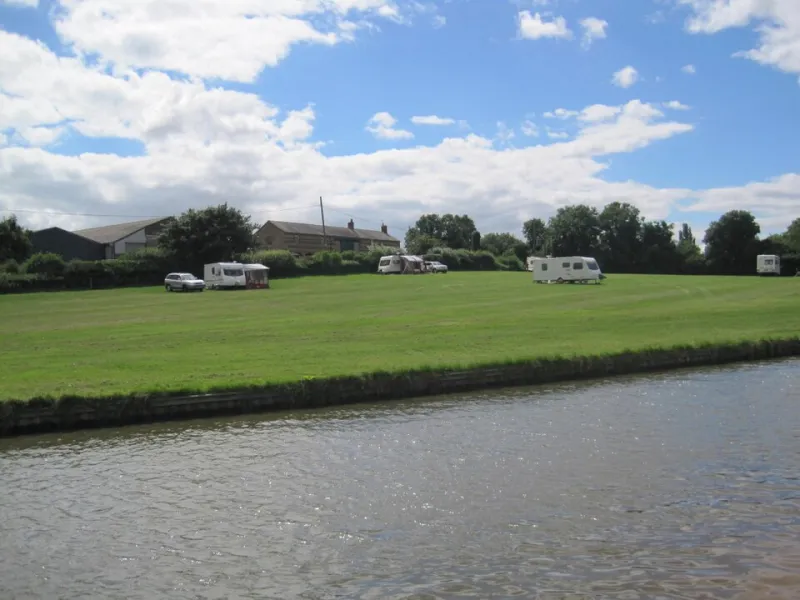
So ring ahead. Small sites and Certificated Locations on the Caravan and Motorhome Club and Camping and Caravanning Club networks are often right on the old road rather than stranded off a bypass, which is exactly what you want — but they can also have a tight entrance and a sloping field. Two minutes on the phone saves an hour of embarrassment.
Book hardstanding between October and March. Carry levelling ramps and chocks as a matter of habit. If your van is long, check whether the site has a turning area before you commit, and don't be shy about asking for a pitch you can drive straight out of.
A route worth stealing
If you want a template, try this. Start in the Chilterns with a couple of nights on a farm CL near Buckingham, and spend a morning walking the old turnpike into the town, counting boundary stones. Move north to a small site outside Daventry and pick up the coaching inns along the old Watling Street alignment. Then finish with three nights in the Dales, using Richmond as a base for the North Riding roads, where the markers are chunky, well documented and usually within a short walk of somewhere that does a decent lunch.
Three locations, four nights, no motorways if you can help it.
Kit that actually earns its place
A paper map, because phone signal in a hedge-lined lane is a rumour. A torch for reading inscriptions in low light. A stiff brush, since most stones are half-buried in leaf litter. Levelling ramps and a good pair of chocks. A flask.
And a bit of patience. The whole appeal here is that you're going slower than the traffic behind you would like.
The stopping is the point
A milestone tour won't fill a photo album the way a week in the Lakes will. What it does instead is give a shape to a journey — a reason to pull into a village you'd otherwise drive through, a reason to read a wall plaque, a reason to let the kids get out and find the number carved into the stone at the end of the lane.
You arrive at the pitch a bit later than planned, with muddy boots and a vague plan for tomorrow. That's roughly the right outcome.