Before You Click the Kettle On: A Calm Ten-Minute Gas Walkaround for Caravanners
There is a particular moment on every caravan trip when the gas system stops being background equipment and becomes the most important thing in Britain: someone wants a cup of tea. The kettle goes on, the hob clicks, and we all expect a neat blue flame and a quiet hiss. Most of the time that is exactly what happens. The trick is to spend ten calm minutes now and then making sure it stays that way.
This is not a scare story. Caravan LPG systems are well understood, widely used and generally very safe when they are looked after. But they are also easy to ignore. The cylinder lives in a locker, the regulator hides behind it, and the hose only gets noticed when somebody is wrestling a fresh Calor bottle into place. A short, repeatable walkaround gives you confidence — and it helps you spot the small things before they become expensive or annoying.
Start with the cylinder locker, not the kettle
Open the gas locker and have a proper look. The cylinder should be upright, secured so it cannot slide about on the road, and connected without any strain on the pigtail. If you use a propane cylinder, check that it is the right one for the season and that the valve is clean and undamaged. A quick sniff is useful, but do not go hunting for leaks with your nose alone. If you can smell gas, stop and follow the emergency steps below.
Look at the flexible hose. Is it cracked, stiff, kinked or rubbing against a sharp edge? Does it look perished at the ends? Hoses have a shelf life, and the date is often printed along the length. If it is out of date, brittle or visibly damaged, do not try to tape it up or persuade it back into service. That is the point to book a competent engineer.
The regulator has a birthday too
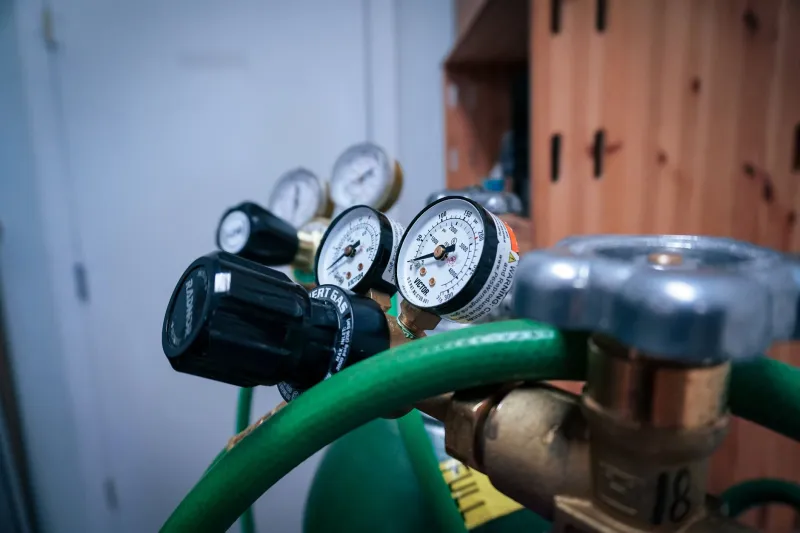
The regulator is the small but vital bit of kit that drops cylinder pressure to something the appliances can use. They do not last forever. Check the date marking on the regulator and compare it with the manufacturer’s guidance. Many caravanners replace regulators on a sensible cycle rather than waiting for a problem, especially if the van spends long periods standing. If the regulator is past its stated life, has been exposed to the weather, or looks corroded, get it changed by someone qualified.
While you are there, make sure the connection to the cylinder is hand-tight and properly seated. Do not attack it with a spanner unless the manufacturer specifically says so. Over-tightening can damage seals just as easily as leaving something loose.
The soapy-water bubble test, explained without drama
The bubble test is exactly what it sounds like. Mix a little washing-up liquid with water in a spray bottle or cup, then apply it to the joints — the cylinder connection, the regulator connection and the hose ends. You are looking for steady bubbles that grow, not the odd bubble from the soap itself. A tiny cluster that keeps expanding is a leak signal. Rinse the area afterwards so the soap does not sit on the fittings.
Do not spray soapy water into the regulator vent or over the whole regulator body. You are testing joints, not giving the equipment a bath. And if you see bubbles, do not keep tightening things and hoping for the best. Turn the gas off at the cylinder, ventilate the locker, and arrange for a Gas Safe registered engineer with LPG competence to look at it. A bubble test is a useful owner check, not a substitute for proper gas work.
Ventilation is part of the system
Caravan gas appliances need air. The drop-in vents, low-level vents and any fixed ventilation in the van are not decorative. They should be clear, not blocked by carpets, cushions, awning skirts or the ever-growing collection of shoes in the doorway. While you are checking, make sure the gas locker itself is not sealed up with aftermarket draught-proofing. Ventilation is there to let any stray gas escape safely and to keep the appliance burning properly.
Test the carbon monoxide alarm — and know what it is for
Carbon monoxide is the odourless one, so an alarm is not paranoia; it is basic caravan housekeeping. Press the test button, check the battery or expiry date, and make sure the alarm is mounted where the manufacturer recommends. If it chirps, deal with it before bedtime rather than promising yourself you will sort it in the morning. Never use a gas hob or oven to heat the van, and never ignore a CO alarm because the flame looks fine.
The ten-minute routine in plain English
- Open the locker and check the cylinder is upright, secure and not leaking at a glance.
- Inspect the hose for cracks, stiffness, kinks and date marks.
- Check the regulator date and condition.
- Make sure connections are properly seated and hand-tight.
- Do the soapy-water bubble test at the joints.
- Clear the ventilation vents.
- Test the CO alarm and check its date.
- Turn on one hob burner briefly and look for a steady blue flame, not a lazy yellow one.
If the flame is yellow, noisy or keeps lifting off the burner, turn it off and get the appliance checked. The same goes for a smell of gas, a damaged hose, a corroded regulator or a leak that reappears after you have done the sensible thing. Those are not jobs for a YouTube tutorial and a hopeful afternoon.
When to call the professional
Call a Gas Safe registered engineer with LPG competence if you smell gas at any point, if the bubble test shows a growing leak, if the hose or regulator is damaged or out of date, or if an appliance is burning badly. If you smell gas strongly, do not flick switches, strike matches or start the engine. Turn the cylinder off if it is safe to do so, open doors and windows, get everyone out, and call the appropriate emergency number. For routine gas work, servicing and appliance repairs, use someone who is qualified to work on LPG in leisure vehicles.
None of this takes long. Ten minutes in the daylight, with the kettle still cold, is a far nicer way to start a trip than discovering a problem at dusk on a windy Friday. Check the obvious, trust your nose and your alarm, and leave the proper gas work to the proper people. Then, and only then, click the kettle on.